

Resource management
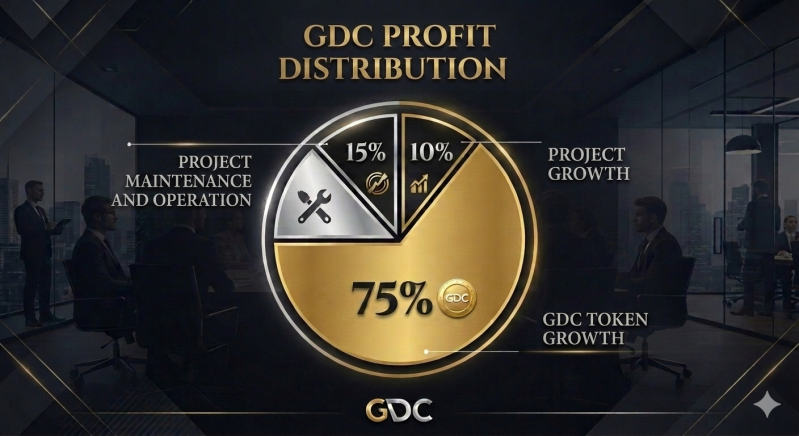
Valuation per thousand: 10% of the total profit—after expenses and taxes—is allocated to project growth; 15% goes toward operating expenses and reserves; and 75% is dedicated to token appreciation. For example, if Good Deal Coin acquires a house at auction for $100,000, invests $150,000 in renovations, and subsequently sells the house for $350,000, that $100,000 net profit would be distributed according to the breakdown mentioned above.
DISCLAIMER
All cryptocurrency investments carry significant risk. No crypto project is immune to hackers, malware exposure, internal administrative issues, or protocol malfunctions; consequently, investing in crypto projects is a high-risk endeavor, and each investor is responsible for managing their own investment and associated risks.
Security and guarantee concepts
Click here to add text.As Good Deal is a tokenized project, we have the assurance that the project's total value does not reside solely on the blockchain; instead, Good Deal’s value is measured across two liquidity pools. The first is the cryptocurrency's implicit value on the blockchain, and the second is represented by tangible assets acquired by Good Deal—such as houses, vehicles, merchandise, tools, and manufacturing machinery. Together, these two pools constitute the project's total liquidity. For example, if Good Deal owns a house worth $350,000 and the project is valued at $200,000 on the blockchain, the company's calculated value is $550,000. Operating this way serves as a security measure: in the event of a cyberattack on Good Deal Coin, 50% of the project's total value remains secured in its real estate and tangible assets, thereby reducing the risk of capital loss.